EGU 2026 · ESSI2.2 · Mon 4 May · X4.95

Zarr at scale

virtualization, sharding, and performance optimizations for Earth science data
Max Jones¹, Joe Hamman², Davis Bennett, Kyle Barron¹, Justus Magin³
¹ Development Seed · ² Earthmover · ³ LOPS, Univ. Brest
Zarr
1 Sharding

Many small chunks, few storage objects

Random access of small chunks with the storage footprint of large ones.

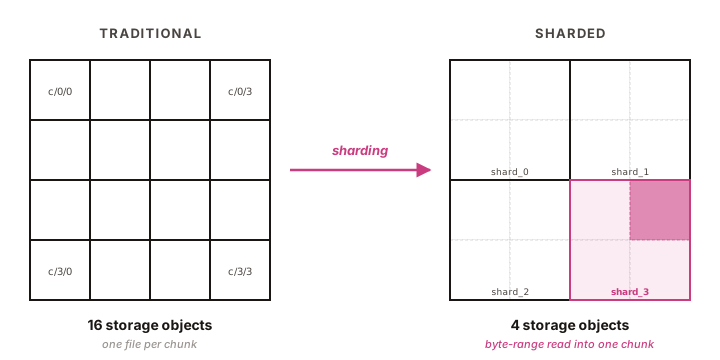
Sharding packs thousands of chunks into a single storage object. Readers fetch only the bytes they need via byte-range requests, so random access stays fast.

HPC filesystems: escape per-file inode pressure
Cloud object stores: skip per-object request overhead
Same access patterns: readers transparently support shards
import zarr zarr.create_array( store="array.zarr", shape=(1024, 1024), chunks=(16, 16), # unit of access shards=(256, 256), # unit of storage dtype="float32", )
Sharding tutorial QR
Traditional Zarr layout vs. sharded layout
2 Virtualization

Read archival files as one Zarr dataset

No conversion, no copies. Point at NetCDF4, HDF5, GRIB, GeoTIFF.

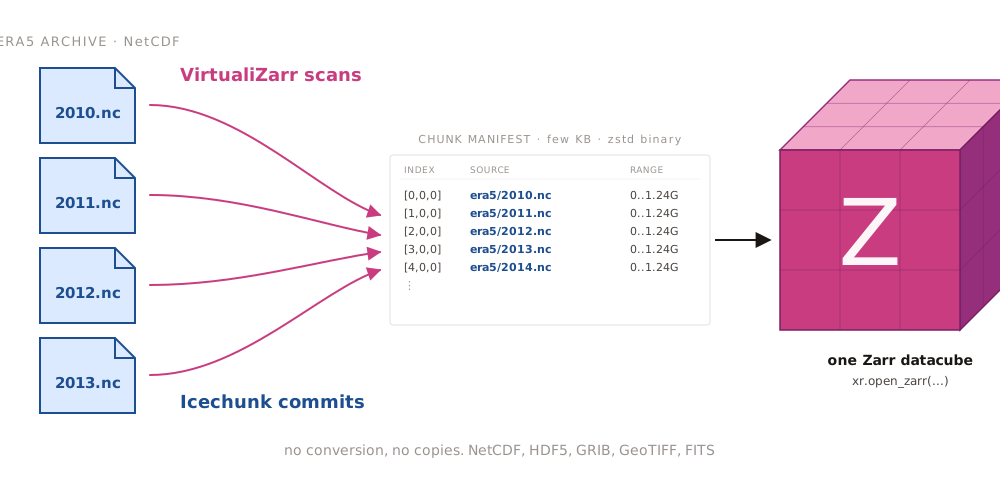
VirtualiZarr scans existing files and builds a virtual manifest. Icechunk commits these manifests transactionally. xarray reads across the whole archive as a single Zarr dataset.

No conversion: expose terabytes of NetCDF/HDF5 without rewriting
Atomic updates: safe under concurrent writes via Icechunk
Format-agnostic: NetCDF4, HDF5, GRIB, GeoTIFF, FITS
import virtualizarr as vz import xarray as xr vds = vz.open_virtual_mfdataset( urls, registry=registry, parser=vz.parsers.HDFParser(), combine="by_coords", ) vds.virtualize.to_icechunk(session.store) session.commit("CMIP6 archive") ds = xr.open_zarr(session.store)
Virtualization tutorial QR
VirtualiZarr + Icechunk flow
3 Variable chunk grids

One array, many chunk sizes

Match chunk size to data density. Fine where it matters, coarse where it doesn't.

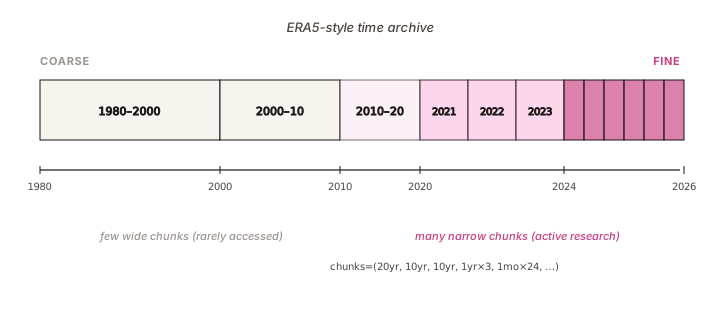
Just landed in zarr-python. A Zarr array can now have non-uniform chunks along any axis. Faster reads where activity concentrates, less storage overall.

Match density: fine chunks where data is dense, coarse elsewhere
Time archives: fine for recent observations, coarse for history
Less waste: no padding sparse regions to fit a uniform grid
import zarr zarr.config.set({"array.rectilinear_chunks": True}) zarr.create_array( store="timeseries.zarr", shape=(8760,), # one year, hourly chunks=[(4096, 2048, 1024, 512, 512, 256, 256, 56)], dtype="float32", )
Variable chunks tutorial QR
Variable chunks along a time axis
4 In-browser rendering

Render multi-terabyte datasets in the browser

Stream Zarr chunks straight to the GPU. No server, no pre-rendered tiles.

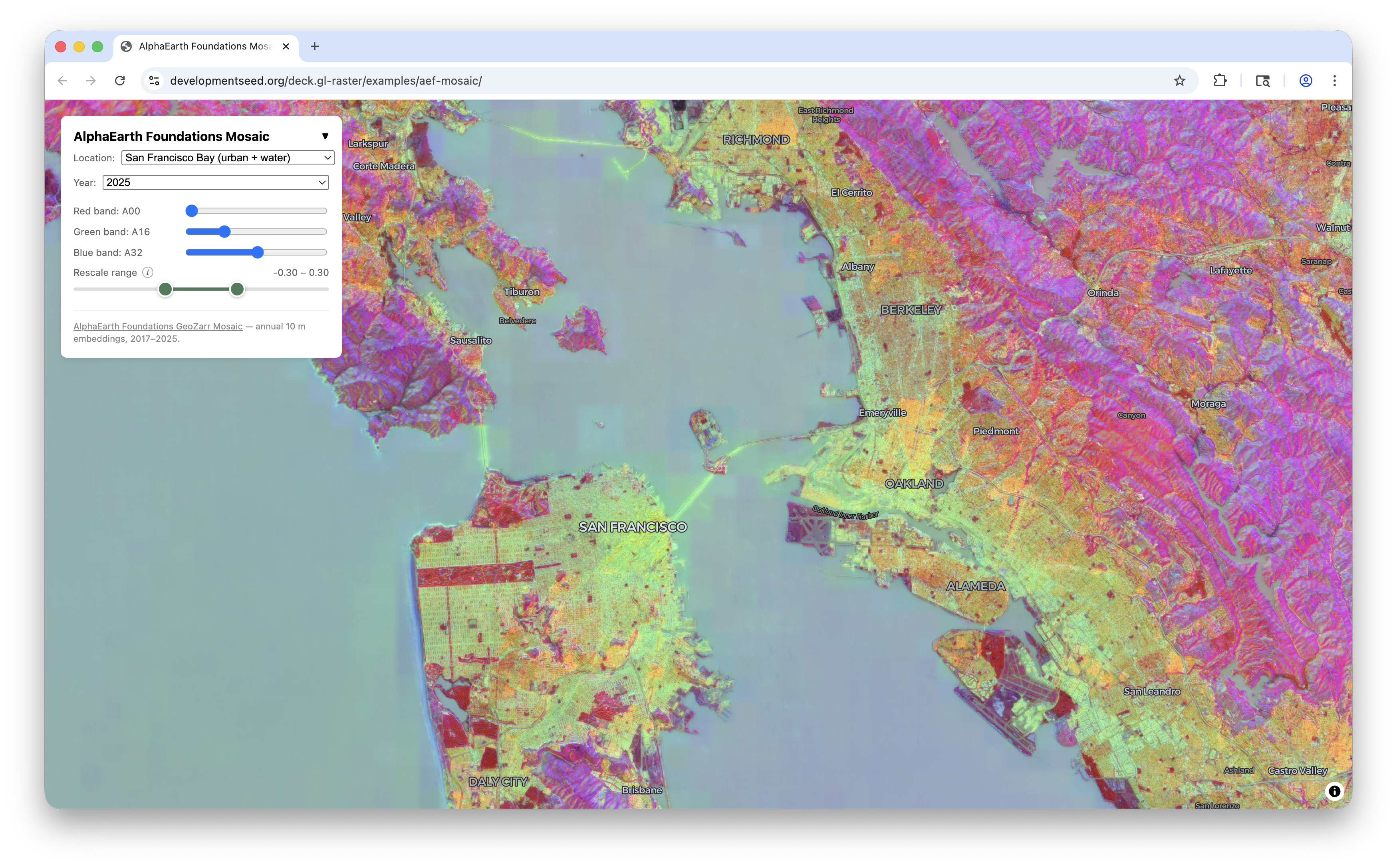
Zarrita.js reads Zarr chunks directly from a browser fetch. deck.gl-raster pushes them onto the GPU. Pan, zoom, recolor a multi-terabyte dataset interactively, on a laptop.

No tile pipeline: skip pre-render, tile cache, tile server
Cloud-native: data lives in Zarr on object storage, read directly
GPU-accelerated: pan, zoom, recolor at interactive rates
import * as zarr from "zarrita" import { ZarrLayer } from "@developmentseed/deck.gl-zarr" const store = new zarr.FetchStore(ZARR_URL) const root = await zarr.open.v3(store, { kind: "group" }) const arr = await zarr.open.v3( root.resolve("/embeddings"), { kind: "array" }) new ZarrLayer({ node: arr, metadata: root.attrs, selection, getTileData, renderTile })
In-browser tutorial QR
deck.gl-raster Zarr visualization
Earth-science profile

GeoZarr: open conventions for geospatial Zarr

Composable conventions for CRS, spatial transforms, pyramids, and climate metadata. OGC standardization in progress, target summer 2026.

Try it: inspect.geozarr.org · geozarr-toolkit · geozarr-examples
proj:
CRS
EPSG, WKT2, PROJJSON
spatial:
Transforms
Affine, grid registration
multiscales
Pyramids
Resolution levels for tiling
CF
Metadata
Climate & Forecast (NetCDF compat)
GeoZarr project QR