Variable chunk grids
One array, many chunk sizes. Match chunk size to data density. Fine where it matters, coarse where it doesn't.
What it does
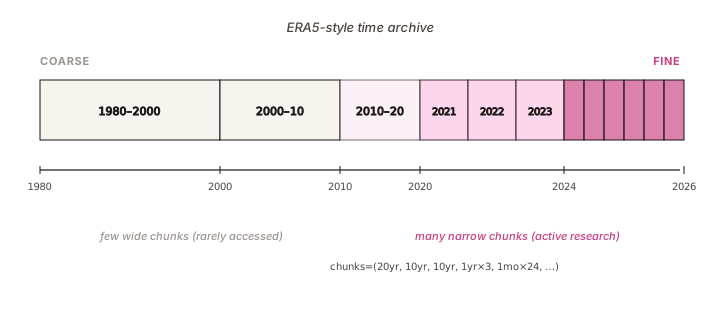
A Zarr array can now have non-uniform chunks along any axis. Instead of every chunk being the same size, you specify a list of chunk sizes per axis. The array's metadata records the irregular grid, and readers fetch only the chunks that overlap the requested region.
Why it matters
- Match chunk size to data density: fine chunks where data is dense or accessed often, coarse chunks elsewhere
- Time-axis archives: fine chunks for recent observations or forecast horizons, coarse chunks for older history
- Less wasted storage: no padding sparse regions to fit a uniform grid
How to use it
Run with uv run site/examples/variable-chunk-grids.py. Rectilinear chunks are experimental in zarr 3.2.0 and must be enabled via zarr.config.
python
# /// script
# requires-python = ">=3.11"
# dependencies = [
#   "zarr==3.2.0",
# ]
# ///
"""Variable (rectilinear) chunk grid: one array, many chunk sizes per axis."""

import zarr
import numpy as np

# Rectilinear chunks are experimental in zarr 3.2.0; opt in via config.
zarr.config.set({'array.rectilinear_chunks': True})

# 1D array with variable chunks along axis 0:
# coarse chunks for older data, fine chunks for recent.
# Chunk edges along an axis must sum to >= the shape extent.
arr = zarr.create_array(
    store='timeseries.zarr',
    shape=(8760,),                                                # one year, hourly
    chunks=[(4096, 2048, 1024, 512, 512, 256, 256, 56)],          # variable chunks along axis 0
    dtype='float32',
    overwrite=True,
)
arr[:] = np.random.random((8760,)).astype('float32')
print('rectilinear chunk sizes:', arr.read_chunk_sizes)